A transfer case is a gearbox in four-wheel-drive and all-wheel-drive vehicles that splits engine power between the front and rear axles. It works by taking power from the transmission and sending it through drive shafts to both axles, either on demand or full time. Your vehicle needs it to deliver better traction, control, and pulling power on slippery roads, steep grades, and rough terrain.
Because it handles so much torque, the transfer case works hard every time you drive, and problems can quickly affect how your vehicle handles. Ignoring early warning signs can turn a simple repair into an expensive replacement. This guide explains how a transfer case works, why it matters, the signs of failure, routine upkeep tips, and what to know when shopping for used transfer cases for sale.
How Does a Transfer Case Work?
The transfer case is bolted behind the transmission, with one drive shaft running to the rear axle and another to the front. In two-wheel drive, it sends power to just one axle. When you switch to four-wheel drive, it engages the front output so both axles receive power at the same time.
Many transfer cases also offer two gear ranges:
- High range (4H) is used at normal speeds on wet, snowy, or loose roads.
- Low range (4L) multiplies torque for slow, demanding jobs like steep climbs or pulling a boat up a ramp.
- Neutral disconnects the drivetrain, often for flat-towing behind an RV.
What Are the Different Types of Transfer Cases?
Not every transfer case works the same way, and the type in your vehicle affects how it drives and how it should be maintained. Here's how the three most common designs found in today's trucks, SUVs, and crossovers stack up.
| Type | How It Works | Common In |
| Part-time | Driver manually switches between 2WD and 4WD; front and rear axles lock together in 4WD | Pickup trucks, off-road SUVs |
| Full-time | Sends power to both axles at all times, using a center differential to allow speed differences | Some luxury SUVs and older 4x4s |
| Automatic / on-demand | Runs mostly in 2WD and engages 4WD automatically when sensors detect wheel slip | Modern SUVs and crossovers |
Why Does Your Vehicle Need a Transfer Case?
A transfer case does far more than switch between two-wheel and four-wheel drive. It shapes how your vehicle handles traction, torque, and changing road conditions. Here are four key reasons your vehicle depends on it.
1. How Does It Improve Traction?
By sending power to all four wheels, the transfer case helps your vehicle grip the road when tires start to slip.
- Better control on snow, ice, mud, and gravel.
- More stability when accelerating on wet pavement.
2. Why Does Low Range Matter for Towing and Off-Roading?
Low range gearing multiplies the torque reaching your wheels, giving more pulling power at slow speeds.
- Makes steep climbs and descents easier to control.
- Helps when launching or retrieving trailers and boats.
3. How Does It Handle Different Wheel Speeds?
When you turn, the front and rear wheels travel different distances. Full-time and automatic transfer cases manage those differences smoothly.
- Prevents binding and tire scrubbing on pavement.
- Protects drivetrain parts from unnecessary stress.
4. Can It Help Save Fuel?
Part-time and automatic systems run in two-wheel drive most of the time, engaging four-wheel drive only when needed.
- Less drivetrain drag during normal driving.
- Less wear on front axle components.
What Symptoms Point to Transfer Case Trouble?
Like any drivetrain component, a transfer case wears over time. Watch for these common symptoms:
- Trouble shifting in or out of 4WD: The vehicle hesitates, won't engage, or pops out of four-wheel drive.
- Grinding, whining, or clunking: Noises that change with speed often point to worn gears, bearings, or a stretched chain.
- Fluid leaks: Puddles under the middle of the vehicle can signal failing seals.
- 4WD warning light: A dashboard alert may indicate an electrical or mechanical fault.
How Can Regular Transfer Case Maintenance Prevent Problems?
Good transfer case maintenance is simple and can add years to the component's life. Most problems start with old, low, or contaminated fluid.
- Change the fluid on schedule: Intervals vary by vehicle, so check your owner's manual.
- Use the correct fluid: Some units need gear oil, while others require automatic transmission fluid or a specific blend.
- Inspect for leaks: Look for wet spots around the seals and housing during oil changes.
- Avoid 4WD on dry pavement: Running a part-time system locked on dry roads causes binding and wear.
How Much Does Transfer Case Replacement Cost?
Transfer case replacement cost depends on several factors, and the difference between options can be significant.
- Vehicle make and model: Heavy-duty trucks and luxury SUVs typically have pricier units.
- New or used: A new dealer unit is usually the most expensive option, while a used one can cost far less.
- Labor: Installation can take several hours, and shop rates vary by location.
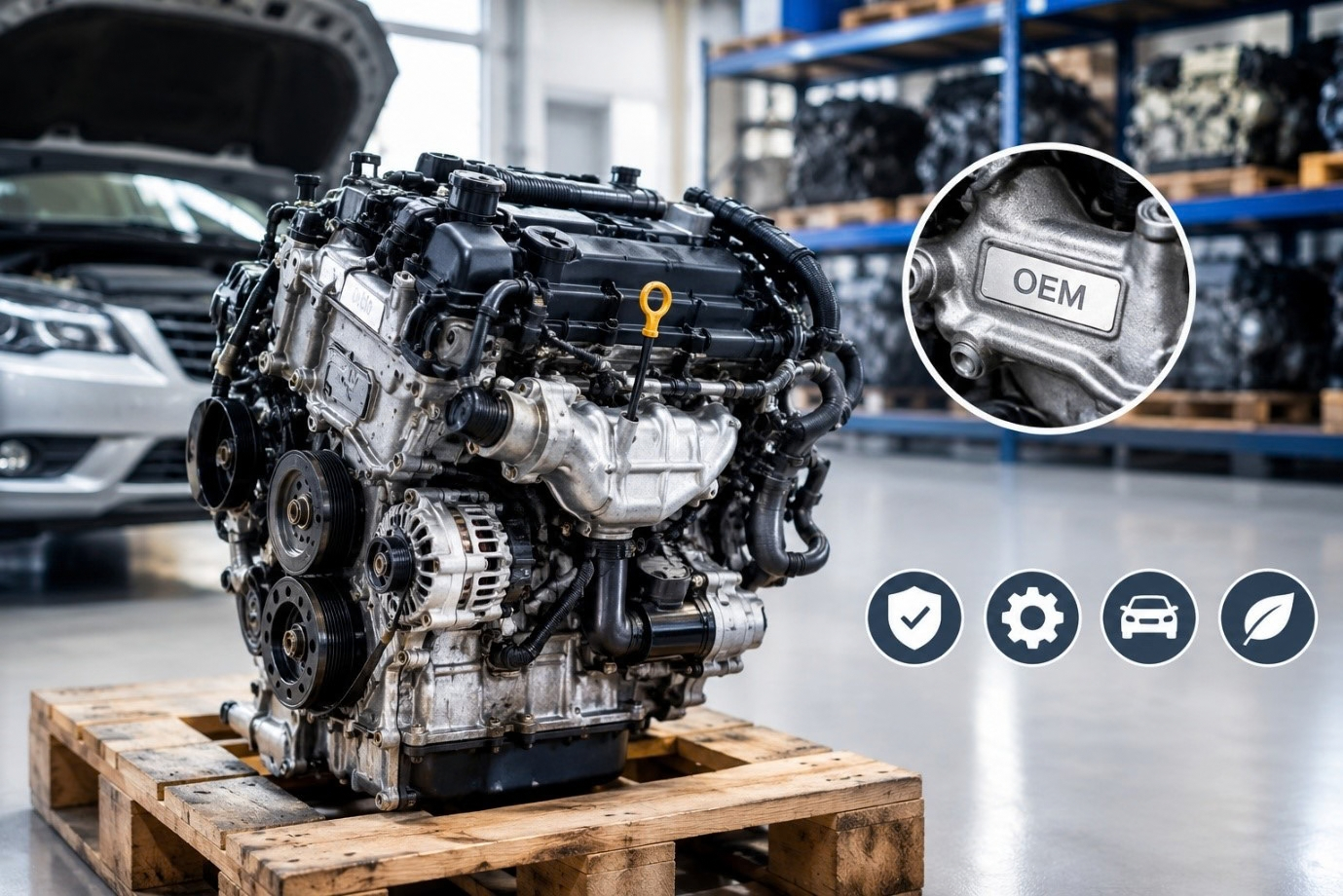
For many drivers, a used OEM transfer case is the most practical way to control repair costs without sacrificing factory fit.
How Do You Choose the Right Used Transfer Case?
Not every used unit will work with your vehicle, so a few quick checks go a long way. Run through this list before you buy used transfer case:
- Is it a match for your VIN?
Decoding your vehicle identification number reveals the correct model, gear ratio, and drive type needed for a proper, trouble-free fit. - Is it the right type?
Part-time, full-time, and automatic units are not interchangeable, so confirm your vehicle's exact system before you place your order online. - How many miles are on it?
Fewer miles usually means less wear on the chain, gears, and bearings, so request the full mileage history up front. - What condition is it in?
Find out whether the unit was checked for leaks, damaged gears, or chain wear, and ask for written inspection notes.
Final Thoughts
The transfer case is what gives your four-wheel-drive or all-wheel-drive vehicle its traction, torque, and control when conditions get tough. Understanding how it works, keeping up with regular maintenance, and acting quickly on warning signs like grinding noises, leaks, or trouble shifting can save you from a costly repair and help protect your entire drivetrain. When replacement is unavoidable, a quality used OEM unit offers a smart balance of factory fit and savings.
Total Auto Parts carries used transfer cases for sale from a nationwide network of salvage yards. Share your VIN with our team, and we'll match you with a unit built for your exact make, model, and drivetrain, then ship it directly to you anywhere in the U.S.
Need a Replacement Transfer Case? We Can Help
Don't let a failing transfer case leave you stuck. Browse our used transfer cases for sale, and let our team help you find a unit that matches your vehicle exactly.
Frequently Asked Questions
What happens if I keep driving on a failing transfer case?
Small problems can spread to the transmission, drive shafts, and axles. If you notice grinding or fluid loss, get it inspected soon.
When does a transfer case need replacing instead of repairing?
A leaking seal or faulty actuator can usually be fixed. Broken gears, a snapped chain, or a cracked housing typically make replacement the better value.
Is a used transfer case a good alternative to a new one?
For many drivers, yes. An inspected OEM unit matched to your VIN keeps the factory fit while costing far less than a new dealer part.
Find Your Part Today
Get your vehicle back on the road today. Browse our inventory and let our team help you find the exact part your car needs at a price that fits your budget.
Find Your Part