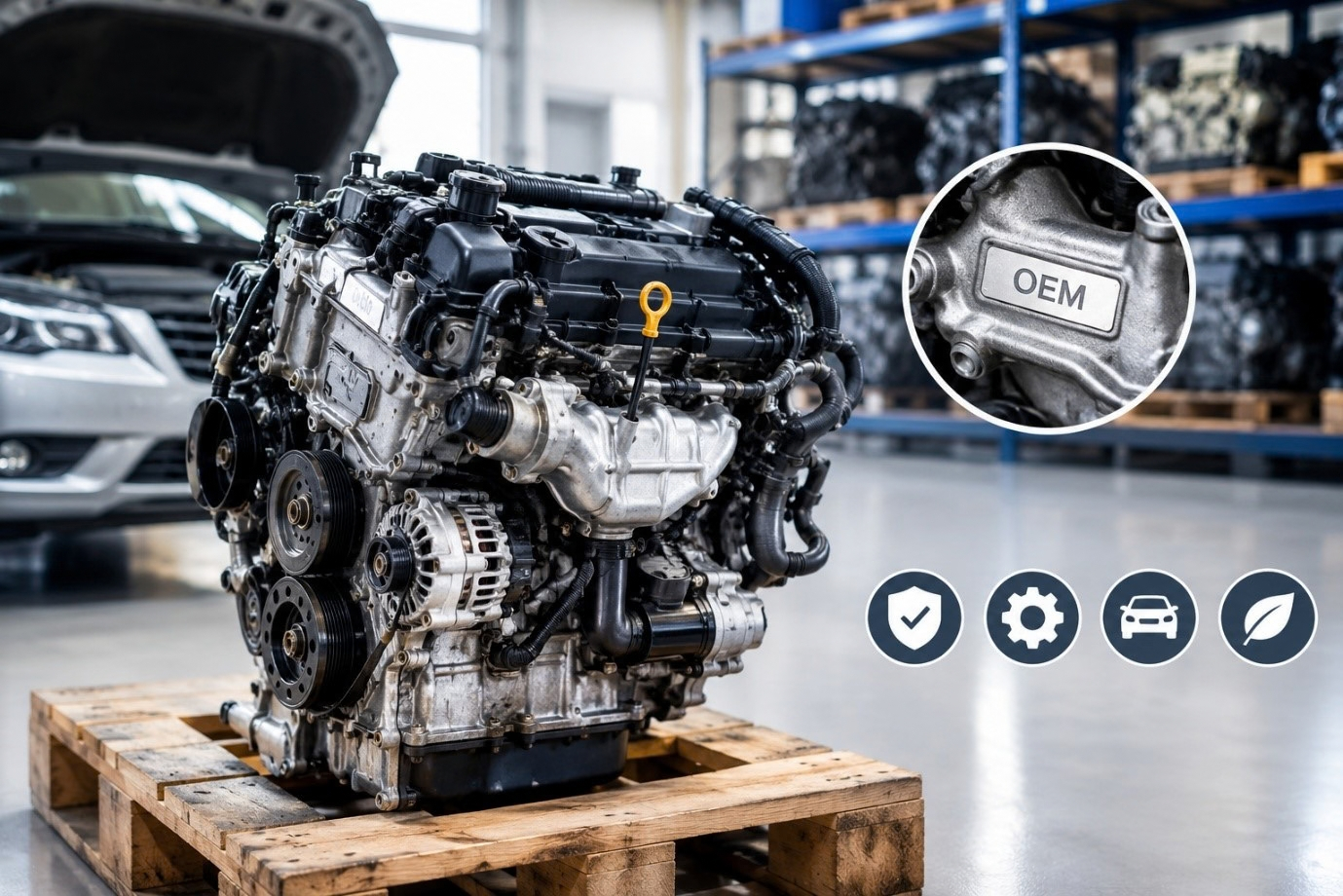
A used OEM engine is a factory-original engine, made by your vehicle's own manufacturer and pulled from a donor vehicle so it can run again in another one. You get the same design, fit, and performance your car had the day it rolled off the line, and you pay a lot less than you would for a brand-new engine from the dealer.
Once an engine fails, whatever you put in its place will affect how the car drives for years. A new engine can cost more than the car itself, and a cheap aftermarket unit might fit poorly or turn out to be hit-or-miss on quality. No surprise, then, that more drivers and repair shops now start their search with OEM used engines for sale. Below, we explain how OEM engines differ from the alternatives, why they're worth choosing, and what to confirm before you buy.
What Is an OEM Used Engine?
OEM means Original Equipment Manufacturer. So an OEM engine comes from the same company that built your vehicle, made to the same specs as the engine that shipped from the factory. The "used" part means it was taken out of a donor vehicle (often one written off for collision damage somewhere other than the engine), then inspected and cleaned up for resale.
Two other options often get mixed up with it:
- Aftermarket engines are made by outside companies, and their materials, tolerances, or design can differ from the original.
- Remanufactured engines are rebuilt from a combination of new and reconditioned parts, and how good they are depends on who did the rebuild.
Whether you're comparing used engines for sale at a local yard or shopping online, an OEM unit sticks to the original factory design, so it matches the car exactly the way it was engineered.
What Are the Benefits of Choosing Genuine OEM Engines?
A used OEM engine does more than fill the gap left by a dead one. It puts your car back to the way it was built. Here are six reasons people go this route.
1. Why Does a Factory Fit Matter?
The engine was designed for your exact make and model, so mounting points, wiring connectors, sensor positions, and hose routing all land where they should.
- Less need to modify anything during installation.
- Fewer leaks and vibrations caused by parts that only almost fit.
- Shorter labor time, which can bring the installation bill down.
When the engine drops in cleanly, your mechanic can spend the hours on the job itself instead of making parts cooperate.
2. Do Used OEM Engines Perform Like the Original?
Manufacturers put their engines through heavy testing before any reach the assembly line. Genuine OEM engines bring all of that engineering along, so you can count on the horsepower, torque, and fuel economy the vehicle was designed for.
- Made with factory-grade materials and tolerances.
- Output lines up with your vehicle's original specs.
- No wondering how an unfamiliar design will hold up over time.
Aftermarket performance can swing from one supplier to the next. With an OEM engine, you already know what you're getting.
3. How Much Can You Save With a Used OEM Engine?
For most owners, a new engine from the dealership is among the priciest repairs they'll ever face. A used OEM engine delivers the same original design for far less, which makes it a sensible pick for older vehicles or tight budgets.
- Usually much cheaper than a new dealer engine.
- Can tip the decision toward repairing the car instead of replacing it.
- Leaves room in the budget for mounts, gaskets, and hoses.
For plenty of drivers, the price is what makes the whole repair worth doing.
4. Will an OEM Engine Work With Your Vehicle's Electronics?
Modern engines are tightly linked to the car's computers, including the engine control module and the emissions sensors. An OEM engine was built to communicate with those systems the way the manufacturer intended.
- Reduces the chance of warning lights or error codes after the swap.
- Helps the car meet emissions requirements.
- Spares you from paying for reprogramming or adapter parts.
Compatibility trouble is one of the biggest headaches with non-OEM engines, and sticking with original parts keeps you clear of it.
5. Does an OEM Engine Help Your Resale Value?
If you may sell the car down the road, an engine that matches the original spec can work in your favor. Buyers and dealers generally think better of OEM replacements than aftermarket swaps.
- Keeps the car closer to its factory condition.
- Simpler to document for the next owner.
- Fewer questions at inspections and appraisals.
6. Is a Used OEM Engine an Eco-Friendly Choice?
A used OEM engine lets a well-made part keep working instead of ending up in the scrap pile. It also means one less new engine has to be built, and building one takes a lot of raw materials and energy.
- Keeps usable parts out of landfills.
- Reduces the environmental footprint of your repair.
- Backs the auto recycling industry.
How Do OEM and Aftermarket Engines Compare?
Either type can get your car running again, but they differ in fit, quality, and compatibility. This table shows the main differences so you can pick what works for your vehicle.
| Feature | Used OEM Engine | Aftermarket Engine |
| Built by | Original vehicle manufacturer | Third-party company |
| Fitment | Matches factory design | May require modifications |
| Electronics compatibility | Designed for your vehicle's systems | Can vary by supplier |
| Quality consistency | Factory standards | Depends on the manufacturer |
| Cost | Lower than new OEM | Varies widely |
What Should You Check Before You Buy Used OEM Engines Online?
Ordering online is easy, but a bit of homework up front saves trouble later. Before you buy used OEM engines online, be sure you have answers to these:
Does it match your VIN? Your vehicle identification number pins down the engine code, displacement, and configuration, so you end up with the right engine for your specific car.
- What is the mileage? An engine with fewer miles usually has more life left, so get the recorded figure before you commit.
- Has it been inspected or tested? Ask if it was checked for compression, leaks, or visible damage, and have the seller share the results.
- What's included? Some engines are sold as bare long blocks, while others come with the intake, alternator, or sensors. That changes what you'll really spend.
- What are the warranty and return terms? A trustworthy seller will explain plainly what's covered, for how long, and how returns work if something goes wrong.
- How will it be shipped? Engines need solid packaging and freight handling to arrive in one piece, so confirm the shipping method and timeline ahead of time.
Spending a few minutes on these points helps make sure the engine that arrives is the right one for your car.
Final Thoughts
Original manufacturer parts are one of the smartest routes for an engine replacement. A used OEM engine gives you factory fit, proven performance, and electronics that play well together, plus real savings. That makes it a strong alternative to pricey new engines and unpredictable aftermarket ones. What matters most is buying from a seller who checks fitment and inspects every unit before it goes out.
At Total Auto Parts, we carry a wide range of auto parts and engines from trusted salvage yards across the United States. Our team uses your VIN to confirm fitment, so you get the right engine the first time.
Find the Right Engine Today
Want your car back on the road? Browse our OEM used engines for sale, or send our team your VIN. We'll locate the exact match and ship it to your door anywhere in the U.S.
Frequently Asked Questions
Are used OEM engines reliable?
They are when the seller inspects and tests each one. Since they're made to factory specs, a properly sourced used OEM engine can run just like the original did.
What's the difference between OEM and aftermarket engines?
OEM engines come from your vehicle's original manufacturer. Aftermarket engines come from third-party companies. The OEM version matches your car's factory design, while aftermarket fit and quality can vary.
How do I know if a used engine will fit my car?
Match it by VIN. That confirms the correct engine code and configuration for your make, model, and year.
Is it worth replacing an engine instead of buying a new car?
Often it is. If the rest of the car is in good shape, a used OEM engine can extend its life for much less than a new or newer vehicle would cost.
Is it safe to buy used OEM engines online?
Yes, provided you buy from an established seller that offers clear fitment checks, inspection details, and warranty or return terms. Always confirm the engine fits using your VIN before you order.
Find Your Part Today
Get your vehicle back on the road today. Browse our inventory and let our team help you find the exact part your car needs at a price that fits your budget.
Find Your Part